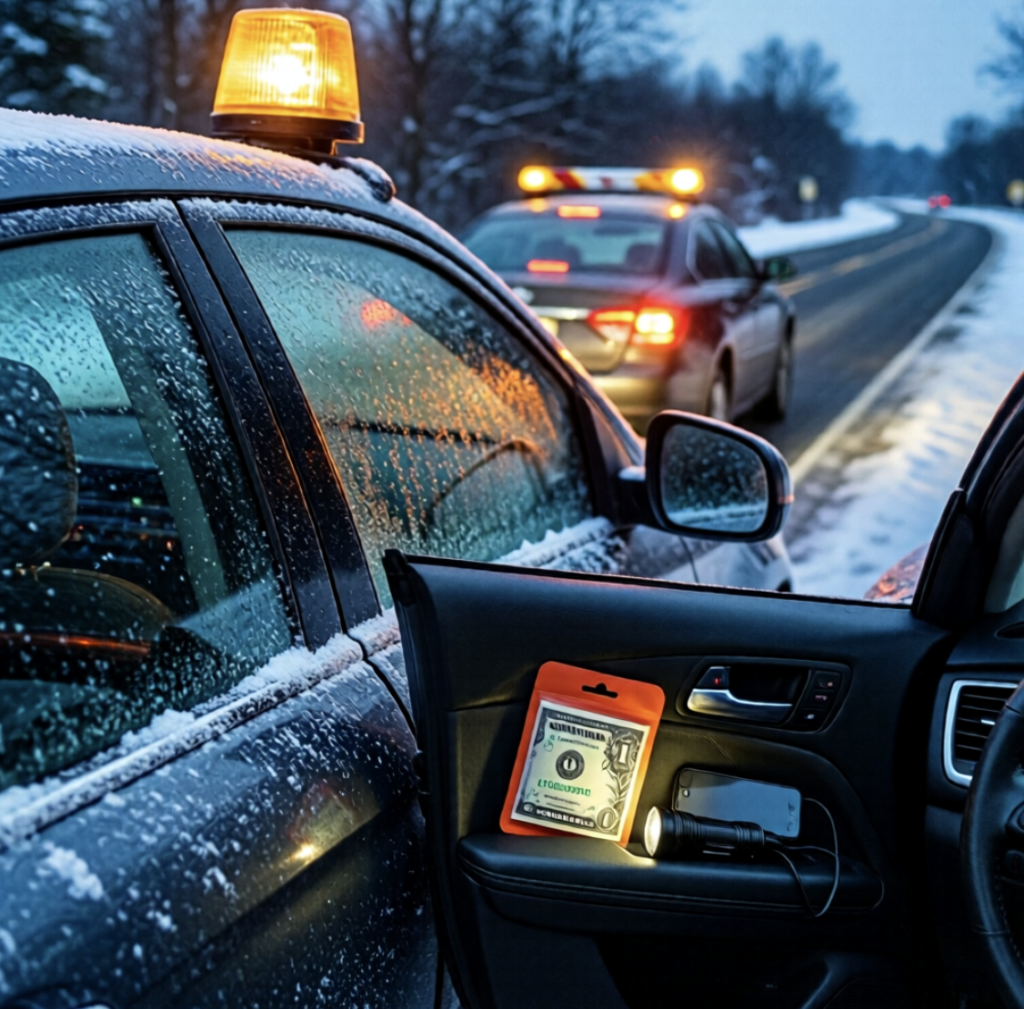
Many drivers spend time preparing for flat tires, dead batteries, or slippery roads, but one winter hazard is often overlooked: losing body heat after a vehicle breaks down.
A stalled car can become surprisingly cold once the engine is turned off. Without the heater running, the temperature inside the cabin gradually approaches the temperature outside, especially during freezing weather. If roadside assistance is delayed because of snow, traffic, or poor weather conditions, even a short wait can become uncomfortable—and in some cases, dangerous.
One inexpensive item that emergency preparedness experts often recommend is a mylar emergency blanket, sometimes called a space blanket. These lightweight blankets are commonly included in first-aid and survival kits and typically cost only a few dollars.
Why does an emergency blanket work?
Unlike ordinary blankets, a mylar emergency blanket is designed to reflect a large portion of the body’s radiant heat back toward the person using it.
Although it does not generate warmth, it helps reduce heat loss, making it a useful backup during unexpected cold-weather situations.
Because it is lightweight and folds into a very small package, it can easily fit inside a glove compartment, center console, or emergency kit without taking up valuable space.
When could it become useful?
A compact emergency blanket may help during situations such as:
- Waiting for roadside assistance after a mechanical breakdown.
- Sitting in traffic for an extended period during severe winter weather.
- Remaining with a disabled vehicle after an accident while waiting for emergency responders.
- Unexpected overnight delays caused by road closures or heavy snowfall.
It may also provide additional warmth for passengers who are more vulnerable to cold temperatures, including older adults, young children, or individuals with certain medical conditions.
What should every winter emergency kit include?
An emergency blanket works best as part of a larger preparedness kit.
Other useful items include:
- Flashlight with extra batteries
- Portable phone charger
- Drinking water
- Non-perishable snacks
- Warm gloves and hat
- Ice scraper
- Small first-aid kit
- Jumper cables
- Reflective warning triangle or road flares
Having these supplies readily available can make waiting for assistance safer and more comfortable.
Important safety reminder
An emergency blanket is not a substitute for proper winter clothing, vehicle maintenance, or emergency services.
If your vehicle becomes disabled in dangerous weather, staying with the vehicle is often safer than walking for help unless authorities advise otherwise. If you run the engine periodically for heat, ensure the exhaust pipe remains clear of snow to reduce the risk of carbon monoxide buildup.
The bottom line
A mylar emergency blanket is inexpensive, compact, and easy to store, yet it can become surprisingly valuable during an unexpected winter breakdown. While no single item can eliminate every risk, adding one to your vehicle’s emergency kit is a simple step that may improve comfort and preparedness when cold weather creates unexpected challenges.
