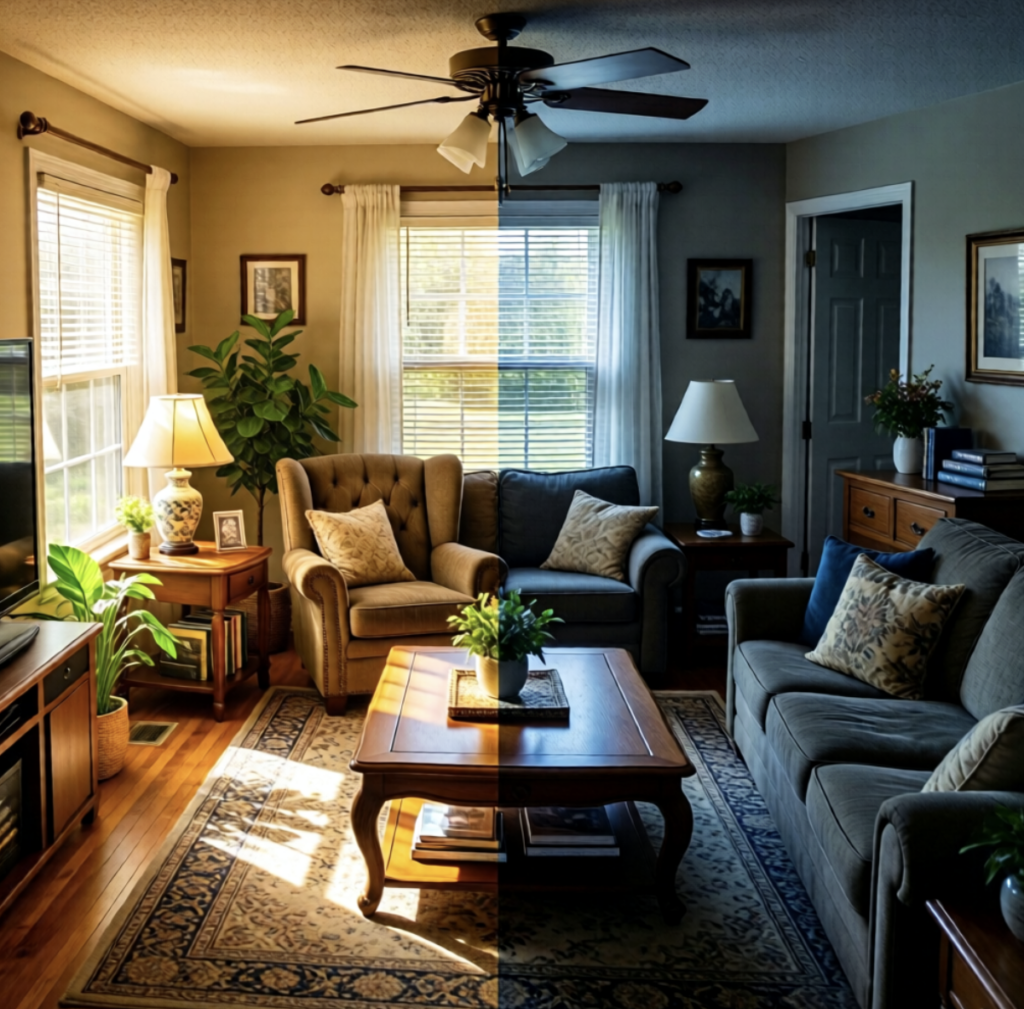
You set the thermostat to a comfortable temperature.
The living room feels fine.
The hallway feels normal.
But one bedroom feels like a sauna.
Or maybe the upstairs office is always hot, no matter how long the air conditioner runs.
At first, it seems strange.
How can one room feel so different from the rest of the house?
The answer is usually not one single problem.
Some rooms stay hotter because of airflow, sunlight, insulation, ductwork, windows, thermostat location, or the way the home was built.
In many cases, the room is not “mysteriously” hot.
It is receiving more heat, losing more cool air, or not getting enough airflow.
Here are the most common reasons some rooms are always hotter than others — and what you can do about it.
1. The Room Gets More Direct Sunlight
One of the simplest reasons a room stays hot is sunlight.
A room with large windows, especially facing the afternoon sun, can heat up much faster than other rooms.
The sun warms the glass.
The glass warms the air inside.
Furniture, floors, bedding, curtains, and walls can absorb that heat and hold onto it for hours.
This is why a west-facing room may feel comfortable in the morning but become hot in the afternoon.
An upstairs bedroom with big windows can feel even worse because it may be getting heat from both the sun and the attic above it.
Simple fixes can help:
Close blinds during the hottest part of the day.
Use thermal curtains or blackout curtains.
Try reflective window film.
Keep doors open if airflow is better that way.
Avoid leaving heat-producing electronics running in that room.
Sunlight may make a room beautiful, but too much direct sun can turn it into the hottest spot in the house.
2. The Air Vents May Be Blocked Or Closed
Before assuming something serious is wrong, check the vents.
Sometimes the reason a room is hotter is surprisingly simple.
A supply vent may be closed.
A couch may be blocking airflow.
A bed may be covering part of the register.
A rug may be placed over a floor vent.
Dust may be reducing airflow.
Even a partially blocked vent can make a room feel warmer because the cooled air is not reaching the space properly.
HVAC experts commonly list blocked or closed vents as a basic cause of uneven room temperatures. Dirty filters and restricted airflow can also make cooling less effective throughout the home.
Walk into the hot room and check:
Is the vent open?
Can you feel air coming out?
Is furniture blocking it?
Is the register dusty?
Is the return air path blocked?
If the room is not receiving enough cool air, it will always struggle to match the rest of the house.
3. The Room May Not Have Enough Return Air
Many people only think about the cool air coming into a room.
But air also needs a way to leave the room and return to the HVAC system.
If a bedroom door is closed and there is no good return air path, pressure can build up. This can reduce airflow and make the room uncomfortable.
This is common in bedrooms, offices, or rooms that stay closed most of the day.
You may notice the room feels hotter when the door is shut and more comfortable when the door is open.
That is a clue.
Some homes have return vents in every room.
Others have only one large return in a hallway or central area.
If the hot room has no return vent, a closed door can make the problem worse.
Simple things to try:
Leave the door open when possible.
Make sure the gap under the door is not blocked.
Use a transfer grille or jumper duct if recommended by an HVAC professional.
Avoid blocking hallway return vents.
A room cannot cool properly if air cannot circulate properly.
4. The Ductwork May Be Leaking Or Poorly Designed
If your home uses central heating and cooling, ducts carry air from the system to each room.
When those ducts are damaged, leaky, disconnected, crushed, too long, or poorly designed, some rooms may receive much less air than others.
This is especially common in rooms farthest from the HVAC unit.
It can also happen in rooms served by ducts running through a hot attic.
If cool air leaks into the attic before reaching the room, the room will stay warmer while your energy bill rises.
ENERGY STAR has noted that in a typical house, about 20% to 30% of the air moving through duct systems can be lost because of leaks, holes, and poorly connected ducts.
Signs of duct problems may include:
Weak airflow from one vent.
One room always hotter or colder.
High energy bills.
Dust around vents.
A room far from the HVAC unit never feeling comfortable.
Air conditioner running often but not solving the problem.
This is usually not something you can fully fix with curtains or fans.
If the ductwork is the issue, an HVAC professional may need to inspect, seal, repair, or rebalance the system.
5. Poor Insulation Can Let Heat In
Some rooms are hotter because they are not well insulated.
Insulation helps slow heat transfer.
Without enough insulation, outdoor heat can enter through walls, ceilings, or attic spaces.
This is especially common in:
Bonus rooms over garages.
Attic bedrooms.
Older additions.
Rooms above unconditioned spaces.
Rooms with exterior walls on multiple sides.
Top-floor bedrooms.
Poor insulation can make a room hot in summer and cold in winter.
That is an important clue.
If the same room is uncomfortable in both seasons, insulation may be part of the problem.
Recent home-cooling guidance also points to poor or missing loft/attic insulation as a reason upper-floor rooms can become heat traps during summer.
Possible fixes include adding attic insulation, sealing gaps, insulating knee walls, improving garage ceiling insulation, or checking whether an older addition was built with proper insulation.
This may cost more than simple fixes, but it can make a major difference in long-term comfort.
6. Windows And Air Leaks May Be Letting Heat In
A hot room may have windows that leak air or allow too much heat through.
Older windows, single-pane glass, worn weatherstripping, gaps around frames, and poorly sealed doors can all let warm air enter and cool air escape.
You may feel this more in rooms with several windows or rooms facing strong sun.
Window problems can create two issues at once:
Solar heat enters through the glass.
Outdoor air leaks in around the frame.
This makes the room harder to cool, even when the air conditioner is running.
Try checking for drafts around windows and doors.
Look for cracked caulk, worn seals, gaps, or damaged frames.
Low-cost fixes can include weatherstripping, caulking small gaps, using curtains, or adding window film.
Long-term fixes may include better windows or professional air sealing.
7. Heat Rises, So Upstairs Rooms Often Run Hotter
If the hotter rooms are upstairs, the explanation may be partly natural.
Warm air rises.
Roofs and attics also absorb heat from the sun during the day.
That heat can radiate downward into the rooms below.
As a result, upstairs bedrooms and offices often feel hotter than rooms on the first floor.
This can be worse if:
The attic is poorly ventilated.
Insulation is weak.
Ducts run through a hot attic.
The upstairs has fewer return vents.
The thermostat is downstairs.
The AC system is single-zone.
A single thermostat downstairs may shut off the air conditioner when the lower level feels cool, even though the upstairs is still hot.
This is why many two-story homes struggle with uneven temperatures.
Possible solutions include zoning, better attic insulation, improved return airflow, duct balancing, ceiling fans, or a smart thermostat with remote sensors.
8. The Thermostat May Be In The Wrong Place
Your thermostat controls the system based on the temperature where it is located.
That means it may not understand what is happening in the hottest room.
If the thermostat is in a cool hallway, near a vent, away from sunlight, or on the first floor, it may think the house is comfortable while another room is still too warm.
This is common when one room gets more sun, has poor insulation, or is far from the system.
The thermostat may shut off the AC too soon because the area around it has already reached the target temperature.
Meanwhile, the hot room never catches up.
A smart thermostat with room sensors may help.
In some cases, moving the thermostat or adding zoning may be better.
But this should be done carefully, because thermostat placement affects the whole system.
9. The HVAC System May Be Too Small, Too Old, Or Poorly Balanced
Sometimes the problem is not only the room.
It may be the entire system.
An air conditioner that is too small may struggle to cool the whole home on hot days.
An old system may no longer perform well.
A system that was installed without proper duct design may create uneven airflow.
A single-zone system may not handle a large or multi-story home evenly.
Even a system that is technically working can still be poorly balanced.
Some rooms may receive too much air while others receive too little.
HVAC professionals often identify poor duct design, duct leaks, inadequate insulation, dirty filters, and system sizing as causes of uneven heating and cooling.
If the hot room has always been hot since you moved in, the system design may be part of the issue.
If the problem started recently, the cause may be a dirty filter, blocked duct, failing component, or airflow restriction.
10. Electronics And Appliances May Be Adding Heat
Some rooms create more internal heat than others.
A home office with computers, monitors, printers, chargers, and lights can get warmer than a bedroom with very few electronics.
A gaming setup can heat a small room quickly.
A laundry room may get hot from the dryer.
A kitchen naturally gets warmer from cooking.
Even a sunny room with a television, computer, and closed door can trap heat throughout the day.
If one room is always hotter, look at what is running inside it.
Try turning off unused electronics.
Unplug chargers when not needed.
Use LED lighting instead of heat-producing bulbs.
Avoid running heat-producing devices during the hottest part of the day.
Small heat sources can add up, especially in a room with poor airflow.
11. Ceiling Fans May Be Set The Wrong Way
Ceiling fans do not actually lower the temperature of a room.
They make people feel cooler by moving air across the skin.
But if the fan is spinning the wrong direction, set too low, or used in a closed room with poor airflow, it may not help much.
In warm weather, most ceiling fans should rotate counterclockwise when viewed from below, pushing air downward and creating a cooling breeze.
Also remember to turn fans off when nobody is in the room.
Fans cool people, not rooms.
If a hot room has a fan but still feels uncomfortable, the fan may help comfort, but it will not fix insulation, duct, sunlight, or HVAC problems.
12. The Door May Stay Closed Too Often
A room that stays closed all day can trap heat.
This is especially true if it gets direct sunlight, contains electronics, or has poor return airflow.
Many bedrooms and offices are used with the door shut for privacy.
But closed doors can reduce circulation, especially in homes without dedicated return vents in each room.
If the room cools down when the door is open, airflow is likely part of the problem.
Try opening the door during the day, using a small fan to move air, or checking whether the return path is blocked.
In some cases, an HVAC professional can improve return airflow with a transfer grille, jumper duct, or other solution.
Quick Checks You Can Do First
Before calling anyone, try a few simple checks.
Open the supply vent.
Move furniture away from vents.
Replace a dirty air filter.
Close blinds during direct sunlight.
Check whether the room improves when the door stays open.
Turn off unused electronics.
Look for air leaks around windows.
Use curtains or window film.
Make sure return vents are not blocked.
Compare airflow from the hot room’s vent to other rooms.
These steps may not solve every problem, but they can help you understand what is happening.
When To Call A Professional
Call an HVAC professional if:
The room has very weak airflow.
The problem continues after basic fixes.
The ductwork may be leaking, crushed, or disconnected.
The system runs constantly but cannot cool the room.
The upstairs is always much hotter than downstairs.
Energy bills are unusually high.
You suspect the system is too small or poorly balanced.
You want duct sealing, zoning, or thermostat changes.
Call an insulation or energy-efficiency professional if:
The room is hot in summer and cold in winter.
The room is above a garage or under an attic.
The home has old windows or visible air leaks.
The attic insulation looks thin, damaged, or uneven.
Some problems are easy.
Others require testing and repair.
The important thing is not to ignore a pattern that keeps coming back.
Final Thought
Some rooms are always hotter than others because they are fighting more heat and receiving less cooling.
Maybe the room gets too much sun.
Maybe the vent is blocked.
Maybe the door traps air.
Maybe the duct leaks before cool air arrives.
Maybe the attic above it is baking all afternoon.
Maybe the thermostat is comfortable while the room is not.
Or maybe the HVAC system was never balanced properly in the first place.
The room is not being difficult for no reason.
It is giving you clues.
Start with the simple things: vents, blinds, doors, filters, and electronics.
Then look deeper: insulation, windows, ductwork, thermostat placement, and system design.
A hot room is not always just a comfort problem.
It can also be a sign that your home is wasting energy.
And once you understand why that room stays hot, you can stop guessing — and start fixing the real cause.
