Most emergencies do not give you much warning.
A storm knocks out the power.
Your car breaks down at night.
A wildfire, flood, or hurricane forces people to leave quickly.
Your phone battery dies when you need it most.
Someone gets hurt, and you have to act before help arrives.
In those moments, preparation matters.
But many people avoid building an emergency kit because they think it has to be expensive.
They imagine a giant backpack, survival gear, complicated tools, and hundreds of dollars in supplies.
The truth is, you can start much smaller.
Even a few low-cost items can make a real difference when something goes wrong.
A $10 emergency starter kit will not replace a full emergency plan. It will not cover every disaster. And it should not be your only preparation.
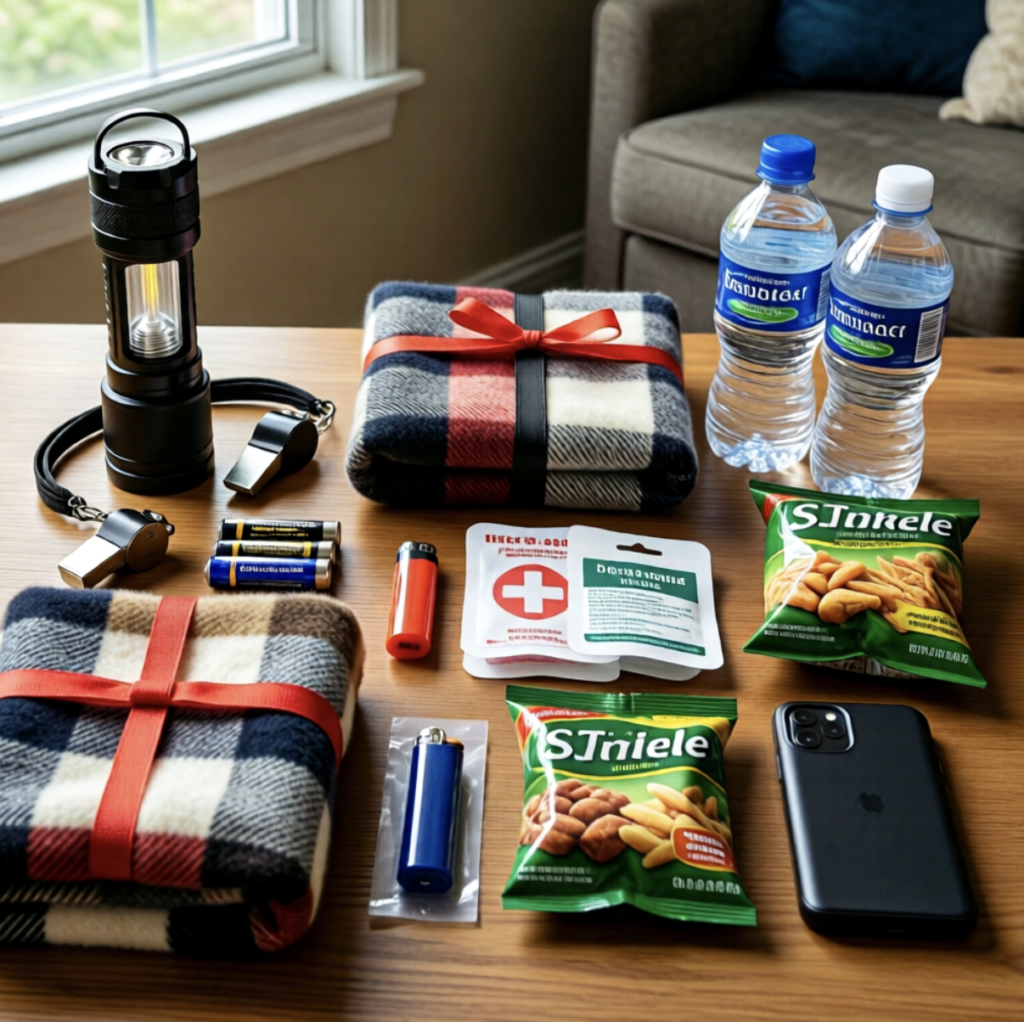
But if you have nothing right now, these seven simple items are a smart place to begin.
1. A Small Flashlight
When the power goes out, darkness changes everything.
A familiar room suddenly feels harder to move through.
Stairs become more dangerous.
Broken glass, furniture, pets, cords, or water on the floor can become hazards.
Your phone has a flashlight, but using your phone as your only light can drain the battery you may need for calls, alerts, maps, or emergency updates.
That is why a small flashlight is one of the most useful emergency items you can own.
Keep one in a drawer, car, bedside table, or emergency bag.
Even a basic dollar-store flashlight is better than having nothing.
A flashlight helps you move safely, check your surroundings, find supplies, signal for help, and avoid wasting your phone battery.
If you can, keep extra batteries with it.
If you cannot afford extra batteries right away, at least test the flashlight regularly so you know it works.
In an emergency, light is not just convenience.
It can help prevent panic.
2. A Whistle
A whistle may look too simple to matter.
But in an emergency, it can be more useful than shouting.
If you are trapped, injured, lost, or unable to call out loudly, a whistle can help rescuers or nearby people find you.
Your voice can get tired quickly.
A whistle carries farther with less effort.
This is why emergency supply lists often include a whistle for signaling for help. Ready.gov lists a whistle as a basic emergency kit item, and the American Red Cross also includes it among survival kit supplies.
A whistle is small, cheap, and easy to keep in a bag, car, keychain, or bedside drawer.
It can be especially helpful during storms, earthquakes, building damage, hiking emergencies, roadside emergencies, or situations where you need to get attention fast.
It is one of those items people rarely think about until the moment they need it.
And by then, it is too late to go looking for one.
3. A Small First-Aid Pack
You do not need a huge medical kit to start.
A few basic supplies can help with small injuries until proper care is available.
Bandages.
Antiseptic wipes.
Gauze.
Medical tape.
A pair of gloves.
Small cuts, scrapes, blisters, or minor bleeding can become harder to manage during an emergency if you have nothing clean nearby.
A small first-aid pack can fit in a purse, glove box, backpack, desk drawer, or emergency pouch.
Ready.gov and the Red Cross both recommend a first-aid kit as part of basic emergency supplies.
Of course, a small kit is not a substitute for emergency medical care.
If an injury is serious, bleeding will not stop, someone has trouble breathing, chest pain, signs of stroke, severe burns, or any life-threatening symptoms, call emergency services right away.
But for minor injuries, a small first-aid pack can help you stay clean, calm, and prepared.
4. Bottled Water
Water is one of the most important emergency supplies.
In a serious emergency, clean water may not be available right away.
Pipes can break.
Water can be contaminated.
Stores can close.
Roads can flood.
Power outages can affect water systems.
The Red Cross recommends one gallon of water per person, per day for emergencies, while Ready.gov also includes water in a basic emergency supply kit.
A full emergency water supply costs more than a few dollars, especially for a family.
But if you are starting with only $10, buy what you can.
Even a few bottles of water in your car, bag, closet, or bedside area can help in the first moments of an emergency.
Water is not exciting.
It is not dramatic.
But when you are thirsty, stuck, overheated, anxious, or waiting for help, it becomes one of the most valuable things you have.
Start small.
Then build from there.
5. A Cheap Emergency Blanket
An emergency blanket, sometimes called a space blanket, is lightweight, compact, and inexpensive.
It folds small enough to fit in a glove box, purse, hiking bag, or emergency pouch.
Its main purpose is to help reduce heat loss and protect you from cold, wind, or exposure.
This can matter during roadside breakdowns, winter storms, evacuations, camping accidents, or power outages where heat is not available.
Even if you never use it for yourself, it could help someone else who is cold, shocked, wet, or waiting for help.
Emergency blankets are often sold in multi-packs, and one blanket may cost very little.
They are not comfortable like a real blanket, and they are not magic.
But they are useful because they are small enough to keep almost anywhere.
The best emergency item is the one you actually have with you when something happens.
6. A Paper List Of Emergency Contacts
This item costs almost nothing.
But it can be extremely important.
Most people keep every important number inside their phone.
But what happens if your phone dies?
What if it breaks?
What if you are injured and someone else needs to contact your family?
What if the internet is down and you cannot access your accounts?
A small paper list of emergency contacts can help when technology fails.
Write down:
Your emergency contact.
A close family member or friend.
Your doctor or pharmacy.
Important medical information.
Allergies.
Medications.
Insurance details if needed.
Your home address.
The Red Cross recommends keeping emergency contact numbers as part of an emergency kit, especially because phones may lose power.
Keep the list in your wallet, car, emergency bag, or taped inside a cabinet where your family knows to look.
If you have children, older parents, pets, medical needs, or live alone, this can be especially helpful.
Sometimes the most important emergency tool is not high-tech.
It is a piece of paper with the right information.
7. A Small Pack Of Cash
In an emergency, cards and apps may not work.
Power can go out.
ATMs can be down.
Internet service can fail.
Stores may only accept cash for a short time.
You do not need a large amount to start.
Even a few small bills can help you buy water, food, gas, a bus ride, a phone charger, or something basic when digital payments are unavailable.
The Red Cross includes cash for essentials as an emergency kit item.
If you are building a $10 starter kit, you may not be able to set aside much.
That is okay.
Start with one dollar.
Then two.
Then five.
The goal is not to be perfect immediately.
The goal is to begin.
Small bills are better than one large bill because they are easier to use if a store cannot make change.
Keep the cash hidden but accessible.
And try not to spend it unless it is truly needed.
How To Build A $10 Emergency Starter Kit
Prices vary depending on where you shop, so this is only a simple example.
You might start with:
A small flashlight.
A whistle.
A few bandages and antiseptic wipes.
A couple bottles of water.
One emergency blanket.
A paper contact list.
A few dollars in cash.
You may already have some of these items at home.
That makes the kit even cheaper to build.
Look through your drawers first.
You may already own a flashlight, extra bandages, a notebook, a pen, or a small pouch.
Then use your $10 only for the missing pieces.
Put everything together in one easy-to-grab place.
A zip bag.
A small pouch.
A shoebox.
A car organizer.
A backpack pocket.
It does not need to look fancy.
It just needs to be easy to find.
Where To Keep It
You can keep a small emergency kit in more than one place.
At home, keep it somewhere everyone can find.
In the car, keep it in the glove box, center console, or trunk.
At work, keep a few basics in a drawer.
In your purse or backpack, keep the smallest items: whistle, contact list, bandages, and a little cash.
The best emergency kit is not the one hidden somewhere you forget.
It is the one you can reach when stress is high and time is short.
What To Add Later
A $10 kit is only a beginning.
Over time, add more supplies when you can.
Ready.gov recommends a broader emergency kit that includes items such as water, food, a battery-powered or hand-crank radio, flashlight, first-aid kit, extra batteries, whistle, dust mask, plastic sheeting, duct tape, moist towelettes, garbage bags, wrench or pliers, manual can opener, local maps, and a cell phone with chargers and backup battery.
The Red Cross also recommends keeping supplies in an easy-to-carry kit for home use or evacuation.
You do not have to buy everything in one day.
Add one item at a time.
Extra batteries this week.
A power bank next week.
A radio later.
More water when you can.
Non-perishable food when it is on sale.
Preparedness is not about panic.
It is about steady, practical steps.
The Most Important Thing Is To Start
Many people have no emergency supplies because they think they cannot afford a “real” kit.
But having something is better than having nothing.
A flashlight can help you see.
A whistle can help you signal.
A first-aid pack can help with minor injuries.
Water can help you get through the first hours.
An emergency blanket can help with cold.
A paper contact list can help when your phone fails.
A few dollars in cash can help when cards do not work.
None of these items is expensive.
None of them takes much space.
But together, they can make you more prepared than you were yesterday.
You do not need to be a survival expert.
You do not need a perfect backpack.
You do not need to spend hundreds of dollars.
Start with ten dollars.
Start with one drawer.
Start with one small pouch.
Start with what you can.
Because in an emergency, the smallest preparation can make the biggest difference.
