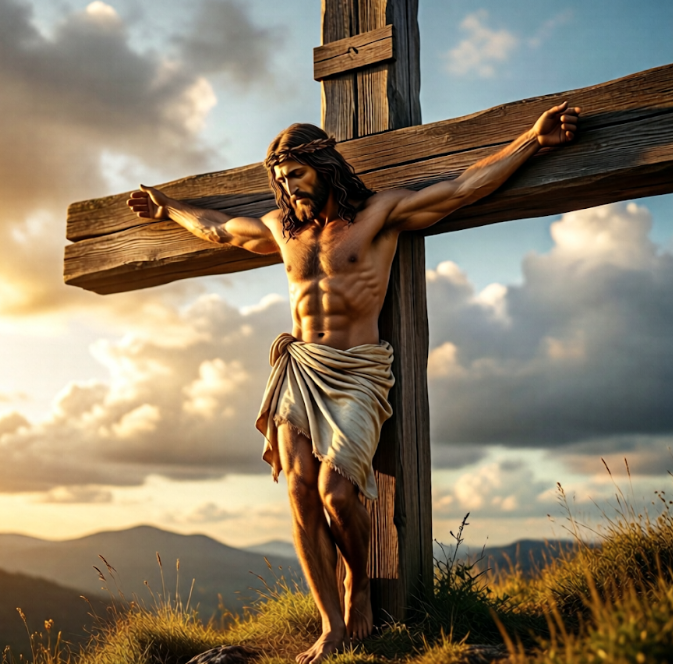
The Journey of Love and Sacrifice on the Road to Calvary: A Reflection on Faith and Suffering
The path to Calvary is etched into the heart of Christian history, a sacred journey that transcends time and space, inviting all who believe to walk alongside Christ in His final, profound act. It was a road laden not merely with the weight of a physical cross, but with the immense burden of humanity’s sin and the infinite measure of God’s boundless love. This harrowing passage, often viewed solely through the lens of suffering, reveals itself upon closer contemplation as the ultimate testament to an unyielding love, a relentless faith, and a perfect sacrifice.
To understand the profound significance of this journey, we must first transport ourselves to Jerusalem, a city brimming with the tension of the Passover festival, yet unaware of the cosmic drama unfolding within its ancient walls. Jesus, having endured betrayal, arrest, and unjust condemnation, was led from the Praetorium, through the city streets, towards Golgotha, the “Place of the Skull,” a site of public execution just outside the city gates. The journey itself, though perhaps a mere half-mile, represented an odyssey of unimaginable pain and spiritual fortitude.
The suffering endured on the Road to Calvary began long before Jesus stumbled under the weight of the crossbeam. The prior scourging, a brutal Roman punishment designed to strip away human dignity and reduce a man to a raw, bleeding mass, had already left Him severely weakened. The crown of thorns, pressed onto His scalp, inflicted excruciating pain with every movement, symbolizing the mockery of His kingship even as it foreshadowed His true reign. Each step along the cobbled streets was a fresh agony, a searing reminder of the injustices piled upon Him.
His body, already ravaged by sleepless nights, emotional torment, and physical abuse, struggled against the heavy timber. The weight was not just the wood itself, but the spiritual burden of all human brokenness, all sin, all separation from God. This was a suffering that went beyond the physical, penetrating the deepest recesses of His soul, yet He pressed onward.
This willingness to embrace such horrific suffering was not born of compulsion, but of a transcendent, divine love. From the moment of creation, God’s desire has been for communion with humanity, a bond shattered by sin. The journey to Calvary was God’s ultimate initiative to restore that broken relationship, a demonstration of love so profound it defies human comprehension. “Greater love has no one than this, that someone lay down his life for his friends,” Jesus Himself had taught, and on this road, He lived out those very words.
His love was not a passive emotion, but an active, driving force that propelled Him forward through every fall, every insult, every searing pain. It was a love that looked beyond the immediate torment to the eternal salvation of countless souls. It was the love of the Father for His creation, manifest in the Son’s willing self-offering.
The sacrifice of Christ on Calvary was the culmination of this journey of love. It was not merely an act of dying, but an act of complete and utter self-giving, a surrendering of His divine life for the redemption of humanity. Every step taken, every drop of blood shed, every breath drawn in agony, was a conscious, deliberate choice to fulfill the Father’s will and to atone for the sins of the world. He, the innocent Lamb of God, offered Himself for the guilty.
This sacrifice reestablished the broken covenant, opening the way for humanity to once again enter into full communion with God. It was a singular, perfect offering, forever altering the course of human history and demonstrating the ultimate triumph of love over death, sin, and despair. The cross, once an instrument of brutal execution, was transformed into the most profound symbol of unconditional love and salvation.
Amidst this overwhelming suffering, Jesus maintained an unwavering faith in His Father’s plan, a steadfast trust that transcended the immediate horrors of His experience. Even in the Garden of Gethsemane, faced with the terrifying prospect of what lay ahead, He prayed, “Nevertheless, not my will, but yours, be done.” This profound surrender was not a sign of weakness, but of ultimate strength and perfect obedience.
His faith was a beacon, shining brightest in the deepest darkness. Even as He cried out, “My God, my God, why have you forsaken me?” a phrase from Psalm 22, it was not a cry of lost faith, but a deeply human expression of utter desolation, voiced within the very framework of a prayer that ultimately testifies to God’s faithfulness. His final words, “Father, into your hands I commit my spirit,” confirmed His absolute trust in God’s sovereignty, even in death.
Along the Via Dolorosa, the “Way of Sorrow,” Jesus was not entirely alone. Several figures intersected His path, each offering a unique reflection of human response to suffering, love, and divine grace. These encounters provide poignant insights into the human condition and the profound impact of Christ’s journey.
One such figure was Simon of Cyrene, a man forced by Roman soldiers to help carry Jesus’ cross. Simon’s reluctant assistance transformed into a profound act of shared burden, a physical manifestation of Christ’s call to “take up your cross and follow me.” His unexpected involvement reminds us that sometimes, God places us in situations where we are called to bear burdens for others, to step into another’s suffering, and in doing so, we unwittingly participate in a divine plan.
Then there was Veronica, a woman whose act of compassion is deeply embedded in tradition. She bravely stepped forward, offering a cloth to wipe Jesus’ blood-stained face, a simple yet profound gesture of human kindness amidst a sea of cruelty. Her courage and compassion offer a powerful lesson: even the smallest acts of love and recognition can bring solace and dignity in the face of immense suffering. Her act symbolizes the innate human capacity for empathy and the desire to alleviate another’s pain, even when the odds are stacked against us.
The women of Jerusalem also encountered Jesus, weeping for Him as He passed. Jesus, turning to them, did not seek their pity for Himself but rather warned them to weep for themselves and for their children, foretelling the impending judgment on the city. This encounter reminds us of the spiritual significance of true sorrow, not merely for outward suffering, but for the deeper spiritual maladies that afflict humanity and lead to such suffering. It was a call to repentance and an awareness of the consequences of sin.
And perhaps most heart-wrenching of all was the presence of Mary, His mother, standing steadfastly at the foot of the cross. Her suffering was that of a mother watching her beloved son endure unspeakable torment, a sword piercing her own soul, as foretold by Simeon. Her silent presence, united with her Son’s sacrifice, embodies the profound depth of maternal love and the enduring strength of faith even in the darkest hour. Mary’s unwavering presence offers comfort and inspiration to all who grieve, reminding us that even in the greatest sorrow, faith can hold us firm.
These encounters highlight the diverse human responses to Christ’s passion: forced participation, compassionate action, lamentation, and steadfast devotion. Each interaction, however brief, underscores the universal reach of the Calvary journey and its ability to stir the human heart in myriad ways.
The historical context of Roman crucifixion further illuminates the brutality and public nature of Jesus’ journey. This form of execution was designed not only to cause immense physical pain but also maximum humiliation. Victims were paraded through the streets, often stripped, to serve as a stark warning to anyone contemplating rebellion against Roman authority. The slow, agonizing death was meant to be a deterrent, a spectacle of absolute power. Jesus’ crucifixion, therefore, was a deeply public and politically charged event, underscoring His identity as a condemned criminal in the eyes of the state, even as He was the King of Kings.
From a Biblical perspective, the Road to Calvary and the crucifixion were not random events but the fulfillment of ancient prophecies, woven throughout the Old Testament. Isaiah 53, the prophecy of the suffering servant, vividly describes a figure “pierced for our transgressions, crushed for our iniquities.” Psalm 22 speaks of a righteous man whose hands and feet are pierced, whose garments are divided, and who cries out, “My God, my God, why have you forsaken me?” Zechariah 12:10 foretells that people will “look on him whom they have pierced.” These prophetic utterances, penned centuries before Christ, found their complete and precise fulfillment in the events of Good Friday, affirming Jesus’ identity as the Messiah and the deliberate nature of God’s plan of salvation.
The spiritual significance of the Road to Calvary for believers today is immense, offering profound lessons for our own lives of faith and suffering. First, it teaches us about the meaning and purpose of suffering. While we naturally shrink from pain, Christ’s journey shows that suffering, when united with His, can be redemptive and transformative. It is not meaningless but can purify, strengthen, and draw us closer to God. When we offer up our own daily struggles, big or small, we participate in His redemptive act, finding meaning in our pain.
Second, the journey reveals the boundless power of redemptive love. Jesus’ actions demonstrate that true love is always self-giving, always sacrificial. Our own acts of love and sacrifice, however humble, reflect this divine principle and bring us closer to the heart of God. Every time we choose to forgive, to serve, or to put another’s needs before our own, we walk a portion of that sacred road.
Third, the call to discipleship found in “take up your cross and follow me” becomes profoundly clearer. This does not necessarily mean literal martyrdom, but a daily commitment to self-denial, to facing our own challenges with courage, and to bearing the burdens that come with living a life devoted to Christ. It means embracing difficulties, not running from them, and finding strength in our dependence on God.
The journey also cultivates empathy and compassion within us. By contemplating Christ’s suffering, we become more sensitive to the pain of others, recognizing His image in every person who suffers. This compels us to acts of charity, justice, and mercy, becoming agents of His love in a broken world. We are called to be a Veronica to those who are hurting, a Simon to those who are overburdened, and a Mary to those who are grieving.
Moreover, the Road to Calvary offers hope in the midst of despair. The darkness of Good Friday is not the final chapter; it leads to the radiant dawn of Easter Sunday. The cross, though a symbol of death, is ultimately a promise of resurrection, eternal life, and triumph over sin. This gives us courage to face our own valleys of shadow, knowing that light awaits beyond.
Finally, the journey calls us to profound gratitude and awe for God’s incredible gift. The Eucharist, the source and summit of Christian life, is the re-presentation of this very sacrifice, sustaining us, strengthening us, and uniting us with Christ’s body and blood, a perpetual reminder of the love poured out on Calvary. Through it, we are nourished for our own earthly pilgrimage.
Living the legacy of the Road to Calvary means putting these spiritual lessons into practical application in our daily lives. It means practicing forgiveness, not just for grand transgressions, but for the daily slights and irritations that can poison our hearts. It means choosing to serve others selflessly, even when it is inconvenient or goes unnoticed, understanding that every act of service mirrors Christ’s own humility.
It demands perseverance in faith during trials and tribulations, trusting that God’s plan, though often mysterious, is always ultimately good. It encourages us to cultivate humility and obedience to God’s will, even when it diverges from our own desires. It invites us to offer up our daily struggles, our pains, our frustrations, uniting them with Christ’s redemptive suffering, transforming them from mere hardships into opportunities for grace. Most importantly, it reminds us that love is not a static sentiment but an active, dynamic force that compels us to move, to give, and to sacrifice for the well-being of others.
The profound journey of love and sacrifice on the Road to Calvary ultimately culminates not in defeat, but in the promise of redemption and the dawn of hope. The cross, once an instrument of torture, became the victory standard of the King of Kings. Through this ultimate act of love, a new covenant was sealed, cleansing us from sin and opening the gates to eternal life, to communion with God Himself. It is the ultimate testament to a love that utterly refused to give up, even in the face of death, because it knew that death itself was not the end.
This sacred journey forever redefines suffering, transforming it from a mere burden into a potential path to spiritual growth and deeper union with the divine. It reminds us that while the path of faith may often lead through trials and tribulations, it is always illuminated by the light of Christ’s unwavering love and the promise of His ultimate victory. May we ever reflect on this profound mystery, drawing strength, hope, and inspiration from the journey to Calvary, allowing its enduring lessons to guide our steps and shape our hearts.
A short prayer:
Heavenly Father, as we contemplate the journey of love and sacrifice on the Road to Calvary, fill our hearts with profound gratitude for Your Son’s unwavering love and perfect obedience. Help us to embrace our own crosses with faith, to love with sacrificial hearts, and to serve others with compassion. May we always remember the cost of our redemption and live lives worthy of Your magnificent grace. Amen.
