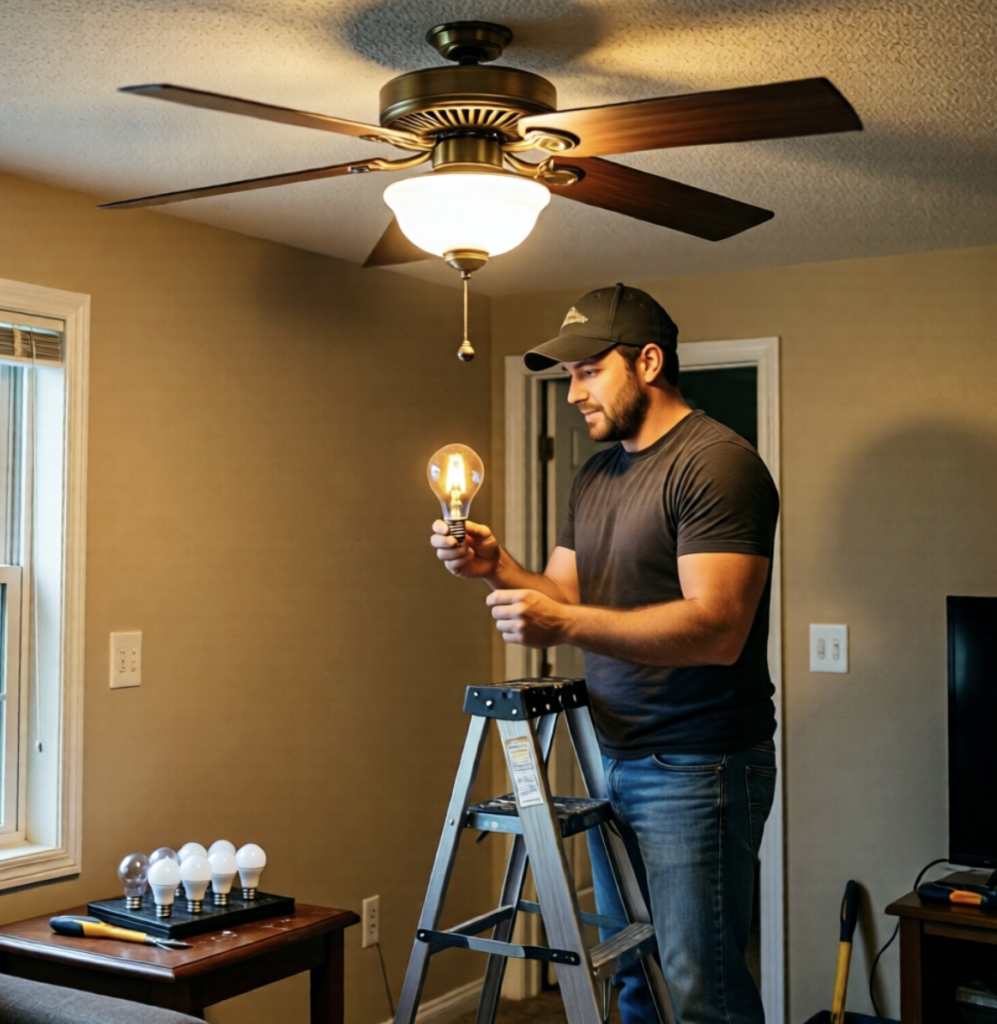
At first, it seems like bad luck.
You replace the bulb.
It works for a while.
Then it burns out again.
So you replace it with another one.
Then that one burns out too.
After the third or fourth time, you start to notice something strange.
It is always the same lamp.
The same ceiling fixture.
The same bathroom light.
The same porch light.
The same spot in the house.
So what is really happening?
When light bulbs keep burning out in the same place, the problem is usually not the bulb itself. The fixture, wiring, switch, heat, vibration, or even the wrong type of bulb may be quietly shortening its life.
And while some causes are simple, others can be warning signs that should not be ignored.
It May Be A Loose Connection
One of the most common reasons a bulb keeps burning out in the same spot is a loose connection.
A light bulb needs steady electrical contact to work properly. If the bulb is not screwed in securely, or if the socket inside the fixture is worn or loose, the connection can become unstable.
That unstable connection can cause flickering, tiny interruptions, or extra stress on the bulb.
Over time, the bulb fails much faster than it should.
This can happen in table lamps, ceiling lights, bathroom fixtures, outdoor lights, and older sockets that have been used for years.
A loose connection may also make the light flicker when someone walks by, touches the lamp, flips the switch, or closes a nearby door.
If the bulb feels loose even after you screw it in, or the light flickers no matter what bulb you use, the socket or fixture may need attention.
This is especially important if you notice buzzing, crackling, warmth, or a burning smell.
Those are not normal signs.
The Fixture May Be Getting Too Hot
Heat is another major reason bulbs fail early.
Many people think a bulb simply needs to fit the socket, but that is not always enough.
Some light fixtures trap heat.
This is especially common in enclosed fixtures, recessed lights, ceiling globes, porch lights, and fixtures with poor airflow.
LED bulbs last longer than old incandescent bulbs in many situations, but they can still fail early if the heat around them cannot escape.
If a bulb is placed inside a fixture that gets too hot, the internal parts of the bulb may wear down much faster.
This is why some LED bulbs are labeled for enclosed fixtures and others are not.
If the same enclosed ceiling light keeps killing bulbs, the problem may be heat buildup.
The solution may be as simple as using a bulb that is rated for that type of fixture, lowering the wattage, or switching to a better fixture with more ventilation.
But if the fixture itself becomes unusually hot, stop using it and get it checked.
The Bulb May Be The Wrong Type For That Spot
Not every bulb works well in every fixture.
A bulb may fit physically, but still be wrong for the location.
For example, some LED bulbs are not designed for enclosed fixtures.
Some are not made for dimmer switches.
Some outdoor bulbs are not suitable for damp or wet areas unless they are labeled for that use.
Some bulbs are not built to handle vibration.
Some fixtures also have a maximum wattage rating. Using a bulb with higher wattage than the fixture allows can create too much heat and shorten the bulb’s life. In some cases, it can create a safety concern.
This is why the small label on the fixture matters.
It may say something like “Maximum 60W” or “Use only Type A lamp.”
That label is not decoration.
It tells you what the fixture was designed to handle.
If you keep replacing a bulb in the same spot, check whether the bulb is actually compatible with the fixture, the switch, the environment, and the heat level.
Sometimes the bulb is not “bad.”
It is simply in the wrong place.
The Dimmer Switch May Not Match The Bulb
Dimmer switches are another common reason bulbs burn out or flicker.
Older dimmer switches were often designed for incandescent bulbs. Many LED bulbs need dimmers that are specifically compatible with LEDs.
If you use a non-dimmable LED bulb on a dimmer switch, it may flicker, buzz, fail early, or behave strangely.
Even dimmable LED bulbs can have problems if the dimmer itself is outdated or incompatible.
This is why the same light fixture may keep ruining bulbs while other lights in the house are fine.
The issue may not be the wiring.
It may be the dimmer and bulb combination.
If the problem happens in a dining room, bedroom, hallway, or living room fixture controlled by a dimmer, check the bulb packaging.
Does it say dimmable?
Then check the dimmer.
Is it designed for LED bulbs?
If not, the fixture may keep causing problems until the switch or bulb type is changed.
Vibration Can Shorten Bulb Life
Some lights are in places that shake more than others.
A garage door opener.
A ceiling fan light.
A light near a heavy door.
A fixture near a washing machine.
A porch light exposed to wind.
A lamp on a table that gets bumped often.
Vibration can damage bulbs over time, especially older incandescent bulbs with delicate filaments.
Even some modern bulbs may not last as long in high-vibration areas if they are not designed for that use.
If bulbs always fail in a ceiling fan, garage light, or fixture near movement, vibration could be the reason.
In that case, look for bulbs labeled for rough service, appliance use, garage use, ceiling fan use, or vibration resistance, depending on the location.
The spot itself may not be haunted or unlucky.
It may simply shake more than you realize.
The Switch May Be Worn Out
Sometimes the problem is not the bulb or the fixture.
It is the switch.
Light switches get used over and over again for years. Eventually, they can wear out.
A worn switch may cause flickering, delayed lighting, buzzing, crackling, or inconsistent power to the fixture.
If the bulb burns out in the same spot and the switch feels loose, warm, noisy, or different from other switches in the house, that is worth paying attention to.
A switch should not make strange sounds.
It should not smell hot.
It should not spark.
It should not feel unusually warm unless it is a dimmer designed to get slightly warm within normal limits.
If flipping the switch causes flickering or popping, do not ignore it.
That may be a sign that the switch needs to be replaced or that the wiring behind it should be inspected.
There May Be A Wiring Problem
If the same fixture keeps burning out bulbs and you have already tried different bulbs, the issue could be inside the wiring.
Loose wiring.
Damaged wiring.
Poor connections.
Corrosion.
A failing fixture.
An overloaded circuit.
These problems can cause inconsistent power, flickering, overheating, or repeated bulb failure.
This is the part where it is important not to guess too much.
If you are not trained to work with electricity, do not start opening fixtures and touching wires.
Electricity can be dangerous, even when the problem seems small.
A light that keeps burning out in the same spot may be annoying.
But if the cause is wiring, it can become a real safety issue.
Call a licensed electrician if the problem keeps happening, especially if you notice flickering, heat, buzzing, burning smells, scorch marks, or breaker trips.
The Voltage May Be Too High Or Unstable
Most homeowners do not think about voltage unless something breaks.
But voltage issues can cause bulbs to fail early.
If the voltage going to a fixture is higher than it should be, bulbs may run hotter and burn out faster.
If the voltage fluctuates, the bulb may be stressed repeatedly.
This problem may affect more than one light, but sometimes it appears more noticeable in one spot because of the fixture, switch, or circuit involved.
Signs of voltage or electrical instability can include:
Lights that brighten and dim unexpectedly.
Multiple bulbs burning out too quickly.
Frequent flickering.
Electronics acting strangely.
Breakers tripping.
Bulbs failing long before their expected lifespan.
This is not something most people should try to diagnose on their own.
If you suspect a voltage issue, it is time to call an electrician.
Outdoor Fixtures Have Extra Problems
If the bulb keeps burning out in the same outdoor light, there may be additional causes.
Moisture.
Temperature changes.
Wind.
Vibration.
Insects.
Corrosion.
Poor sealing.
Wrong bulb type.
Outdoor fixtures need bulbs and fixtures rated for the environment.
A covered porch light is not the same as a fully exposed yard light.
A damp location is not the same as a wet location.
If water or moisture gets into the fixture, it can damage the bulb or create a safety hazard.
If you see rust, corrosion, water marks, cracked glass, or loose seals, the fixture may need repair or replacement.
Outdoor lights are easy to ignore until they stop working.
But because they face weather, they may need more attention than indoor lights.
Could It Just Be Cheap Bulbs?
Sometimes, yes.
Low-quality bulbs can fail early.
If you bought a bargain pack and several bulbs from the same box are dying quickly, the bulbs may be part of the problem.
But here is the key question:
Do bulbs burn out quickly everywhere?
Or only in one specific fixture?
If bulbs from the same pack fail in different rooms, the bulbs may be low quality.
But if any bulb you put in one particular spot burns out early, the spot deserves attention.
That pattern matters.
The same location failing again and again usually means there is something about that fixture, switch, environment, or circuit causing the problem.
What You Can Check Safely
Before assuming the worst, there are a few simple things you can check.
Make sure the bulb is screwed in properly.
Make sure the bulb type matches the fixture.
Check the fixture’s maximum wattage label.
Use a bulb rated for enclosed fixtures if the fixture traps heat.
Use a dimmable bulb only with a compatible dimmer.
Use outdoor-rated bulbs in outdoor fixtures.
Try a better-quality bulb.
Notice whether the fixture gets unusually hot.
Pay attention to flickering, buzzing, burning smells, or scorch marks.
If the problem stops after changing the bulb type, the issue may have been compatibility.
But if the problem continues, do not keep replacing bulbs forever.
The repeated burnout is a clue.
When To Call An Electrician
You should call a licensed electrician if the same light keeps burning out even after you have tried the correct bulb.
You should also call if you notice:
Flickering that does not stop.
A buzzing or crackling sound.
A burning smell.
A warm or hot switch.
A warm or hot fixture.
Scorch marks.
Loose sockets.
Breakers tripping.
Lights dimming when appliances turn on.
Multiple bulbs failing around the house.
These signs can point to electrical issues that should be checked professionally.
It is better to fix the cause than keep replacing bulbs and hoping the problem goes away.
The Real Reason It Keeps Happening
So why do light bulbs always burn out in the same spot?
Usually, it is because that spot has a hidden problem.
A loose socket.
Too much heat.
The wrong bulb.
An incompatible dimmer.
A worn switch.
Vibration.
Outdoor moisture.
Unstable voltage.
Or wiring that needs professional attention.
The important thing is the pattern.
One bulb burning out may mean nothing.
Two bulbs might be coincidence.
But if bulbs keep failing in the same place, your home may be trying to tell you something.
Do not ignore the clue.
The fix may be simple.
But the warning may be important.
Sometimes the problem is not the light bulb.
Sometimes the problem is the place you keep putting it.
