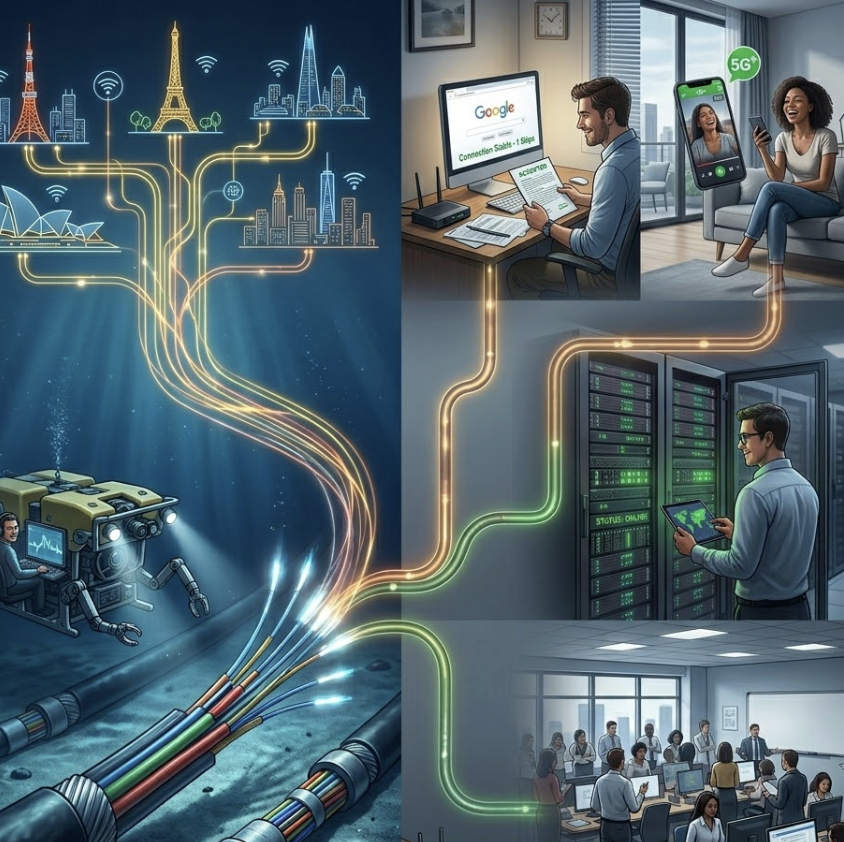
Most people never think about undersea cables.
We use the internet every day.
We send messages.
Watch videos.
Make video calls.
Check bank accounts.
Read the news.
And somehow, everything just works.
But what many people don’t realize is that nearly all of that information travels through thousands of miles of cables lying on the ocean floor.
In fact, more than 95% of international internet traffic moves through undersea fiber-optic cables.
Not satellites.
Not wireless towers.
Cables.
And when one of those cables is damaged, the effects can be felt by millions of people.
━━━━━━━━━━━━━━━━━━
Imagine a major highway connecting several large cities.
Every day, millions of vehicles travel along it.
Now imagine that highway suddenly closes.
Traffic doesn’t stop completely.
Instead, vehicles must take smaller alternative routes.
Those routes quickly become crowded.
Everything slows down.
The same thing happens on the internet.
When an undersea cable is cut, internet traffic must be redirected through other cables.
The problem is that those backup routes often have limited capacity.
As more traffic is forced onto them, connections become slower and less reliable.
━━━━━━━━━━━━━━━━━━
Many people assume undersea cables are enormous structures.
The reality is surprising.
Most are only about as thick as a garden hose.
Inside are bundles of fiber-optic strands that carry light signals across oceans at incredible speeds.
These cables stretch for thousands of miles between continents.
Some connect North America to Europe.
Others connect Asia to Australia.
Together they form the invisible backbone of the modern internet.
Without them, the world would look very different.
━━━━━━━━━━━━━━━━━━
So what causes these cables to break?
Many people imagine shark attacks because of stories that have circulated online for years.
While sharks have occasionally bitten cables, they are not the main threat.
The biggest causes are surprisingly ordinary.
Fishing trawlers dragging heavy equipment across the seafloor.
Ship anchors dropped in the wrong place.
Underwater landslides.
Earthquakes.
Powerful storms.
Even simple wear and tear can eventually damage a cable.
When a break occurs hundreds or even thousands of feet underwater, locating and repairing it becomes a massive challenge.
━━━━━━━━━━━━━━━━━━
Repairing an undersea cable is not as simple as fixing a wire in your home.
Specialized ships must first determine the exact location of the damage.
Then crews carefully lift the cable from the ocean floor.
The damaged section is removed.
A replacement segment is connected.
The cable is tested.
Finally, it is lowered back into the sea.
Depending on weather conditions and the location of the break, repairs can take days or even weeks.
━━━━━━━━━━━━━━━━━━
The consequences can be serious.
Internet speeds slow dramatically.
International phone calls may experience interruptions.
Video streaming becomes unreliable.
Businesses that depend on cloud services face delays.
Banks, airlines, hospitals, and government agencies can all be affected.
In some regions, multiple cable failures occurring at the same time have temporarily reduced internet capacity for millions of people.
While complete internet blackouts are rare, major disruptions can still impact daily life in ways most people never expect.
━━━━━━━━━━━━━━━━━━
What’s fascinating is that most of the world’s digital life depends on infrastructure that very few people ever see.
Beneath the oceans lies a vast network of cables carrying emails, financial transactions, social media posts, video calls, and countless other pieces of information every second.
Every message you send to someone on another continent may travel through one of these cables before reaching its destination.
━━━━━━━━━━━━━━━━━━
The real surprise is this:
When people think about the internet, they often imagine satellites floating in space.
But the modern internet depends far more on cables lying quietly at the bottom of the ocean.
A single damaged cable can affect millions of people because the world has become deeply connected through these invisible links.
The next time your internet slows down because of an undersea cable outage, remember:
The problem may not be happening in your city.
It may be happening thousands of miles away, deep beneath the sea.
👇 Did you know that most international internet traffic travels through undersea cables rather than satellites?
