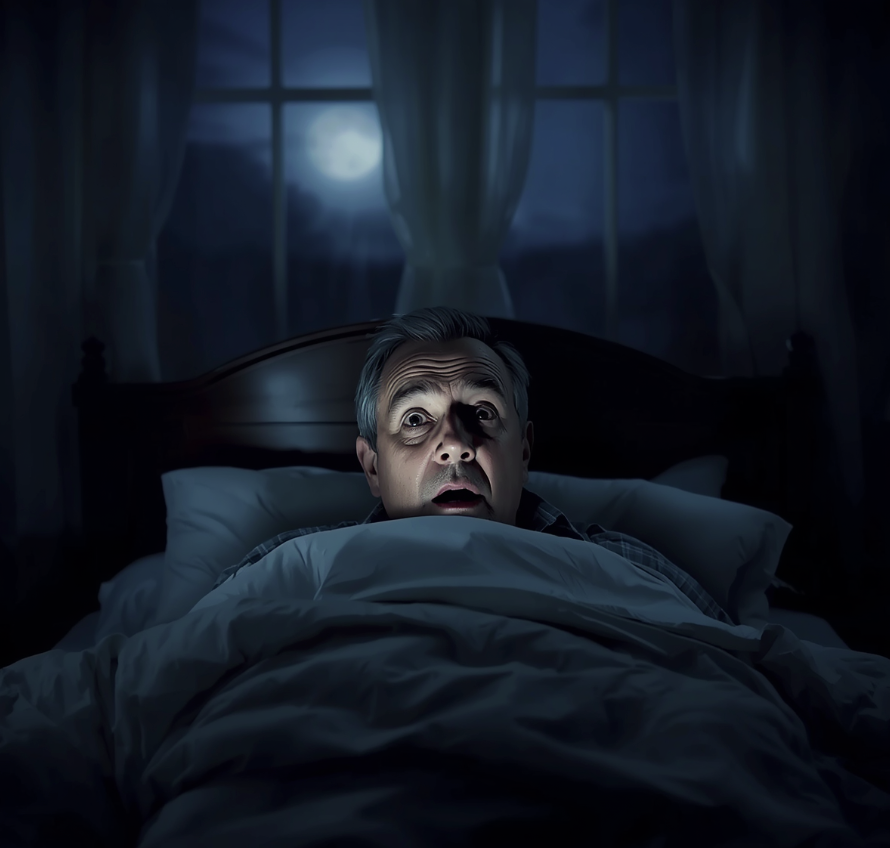
😴 You’re just about to fall asleep…
Your eyes are closed.
Your body is finally relaxing after a long day.
Then suddenly—
⚠️ Your entire body jerks awake.
Sometimes it feels like you’re falling off a cliff.
Sometimes it feels like you missed a step.
Sometimes it feels like someone pushed you awake at the last second.
For a moment, your heart races.
You look around.
Everything seems normal.
So you roll over and try to go back to sleep.
But have you ever wondered why it happens?
And why millions of people experience the exact same strange sensation?
Most people think it’s random.
The truth is far more interesting.
What you just experienced is commonly known as a hypnic jerk or sleep start.
It happens during one of the most mysterious transitions the human body makes every day—the moment between wakefulness and sleep.
As you begin drifting off, your brain starts changing activity patterns.
Your breathing slows.
Your muscles begin relaxing.
Your heart rate gradually decreases.
In other words, your body is preparing for sleep.
But sometimes your brain and body don’t make the transition perfectly together.
Part of the brain may briefly misinterpret the sudden relaxation of your muscles as a sign that you’re actually falling.
In response, your nervous system fires a rapid signal through your body.
The result is a sudden involuntary muscle contraction.
That powerful jolt can be strong enough to wake you up completely.
For some people it’s only a tiny twitch.
For others it feels like falling from a great height.
Some even report seeing a flash of light, hearing a sound, or dreaming they tripped right before they wake up.
The strange thing is that this experience is incredibly common.
Researchers estimate that a large percentage of adults experience hypnic jerks at some point in their lives.
Many people experience them regularly.
Yet because they happen so quickly, most never talk about them.
What’s even more interesting is that certain habits appear to make them happen more often.
☕ Too much caffeine late in the day.
😰 High stress levels.
📱 Scrolling on your phone right before bed.
💼 Worrying about tomorrow’s problems while trying to fall asleep.
💤 Not getting enough sleep night after night.
🏃 Exercising intensely close to bedtime.
When your brain remains highly stimulated while your body is trying to shut down, the chances of experiencing a hypnic jerk may increase.
Think about it this way.
Your body wants sleep.
But your brain is still acting like it’s daytime.
That mismatch can sometimes create unusual signals during the transition.
Many sleep specialists believe stress plays a particularly important role.
When you’re anxious, your nervous system stays on high alert.
Even after you get into bed.
Even after your eyes close.
Even when you’re exhausted.
Your body may be trying to sleep while part of your brain is still scanning for danger.
And that can increase the likelihood of sudden nighttime jolts.
For older adults, these experiences can sometimes become more noticeable because sleep patterns naturally change with age.
People often sleep more lightly than they did when they were younger.
As a result, small disturbances that once went unnoticed may suddenly wake them up.
The good news?
For most people, hypnic jerks are completely harmless.
They’re generally considered a normal part of the sleep process.
They do not usually indicate a serious neurological condition.
However, if they become extremely frequent, interfere with sleep, occur repeatedly throughout the night, or are accompanied by other concerning symptoms, it’s wise to speak with a healthcare professional.
Sometimes sleep disorders, medication effects, or underlying medical issues can contribute to unusual nighttime movements.
The simplest way to reduce hypnic jerks is often improving your sleep routine.
✔️ Maintain a consistent bedtime.
✔️ Limit caffeine in the afternoon and evening.
✔️ Reduce screen time before bed.
✔️ Create a relaxing nighttime routine.
✔️ Manage stress whenever possible.
✔️ Prioritize getting enough sleep.
Many people notice significant improvement after making just a few small changes.
The next time your body suddenly jerks awake just as you’re falling asleep, remember:
You’re not alone.
Millions of people experience the exact same thing.
And in most cases, it’s simply your brain and body having a brief disagreement about whether it’s time to sleep.
😴 Has this ever happened to you?
👇 Comment “YES” if you’ve ever felt that strange sensation of falling just as you were drifting off to sleep.
